

Things in the Basement
what a long-ago stepfather taught me about food and other things

My mother's second husband fancied himself a gourmet, a gourmand, a bigger and louder and more raucous bon vivant than any mama's boy law professor at a state school in Cleveland could possibly genuinely be. It was the seventies and he was in his forties and the combination was as kerosene on the fire of his mid-life crisis. Having been a dorky nebbishy nerd the first time through he was not about to let a second chance at a grandiose adolescence pass him by.
There were wild parties, day-long and even weekend-long extravaganzas, eclectic jam sessions in which a wild hootwhompdoodling throbbed from behind the closed doors of the large formal dining room of the house we lived in with him. They’d move the heavy table into the living room and roll up the rug and there'd be trumpet and guitar and bass and clarinet and someone banging on our old yellow Chickering upright piano. Mikey the speed-freak cardiologist would wail on his electric viola in between frantic sorties into the kitchen where my brother and sat at the kitchen table eating our peanut-butter sandwiches amidst a litter of party food, wine-sticky glasses, and melting ice. “Gotta get a glass of water,” he’d tell us through a toothy grin while he got himself another highball glass of tap water with which to wash down more of the little red and white "heart pills" he extracted from the brass pillbox he carried around in his shirt pocket.
It was as close to hippie existence as I think one got in Cleveland, Ohio. As often my mother caved in, we had late suppers that got me used to eating omelet and salad at 9 o'clock at night. (“Like the French do,” he’d insist, toasting himself with a juice glass of Gallo red.) He grew a jungle of houseplants in the living room windows, thick with aerial bombardments of spider plant babies and muscular philodendrons that camouflaged several flourishing specimens of C. sativa my mother only realized were there because I pointed them out to her.
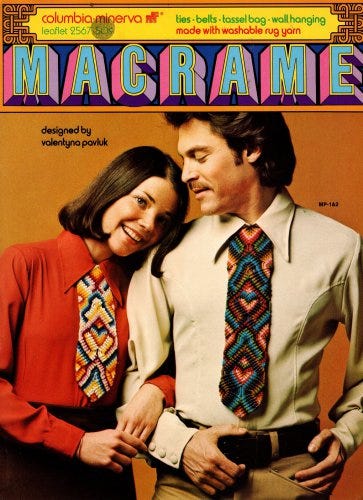
Insect-legged rhinos teetered across a framed Dali print that hung in a heavy silver-painted frame over the fireplace. The elegant arms of a Calder mobile, one of those small-scale copies you can buy in a museum gift shop, revolved slowly amidst rising curls of smoke from English Ovals and the two little pipes my mother permitted only in the small sunroom off the living room, the space reserved strictly for our stepfather and which he called, with audible capital letters, The Library. He would stay in there for hours in his orange and rust plaid recliner, the loveseat-sized speakers of his hi-fi system blasting, playing his trumpet along with Gordon Lightfoot, Kris Kristofferson, and Jean-Pierre Rampal and Claude Bolling’s Suite for Flute and Jazz Piano Trio. He drank jug wine, had a handlebar mustache and wire-rimmed glasses, and not only owned but wore at least one macramé necktie.
When things were good with David, being his stepchild was a liberal education and usually pretty okay. Sure, sometimes drunk grownups wandered into our bedrooms during the wild parties, and when my brother and I were sent to bed we might flick on the lights to find two slobbery grownups leaning against the wall, feeling each another up, or worse, in full-on, hairy-assed sweaty grunting seventies-bush-bumpin’ rut on one of our beds. Sure, once in a while I’d walk into a room to see some stoned dude trying, or sometimes succeeding, to grope my mom. It wasn’t a surprise, since they groped me too. I hated it. It was scary. But it seemed like it was just a thing that happened. No one else seemed to be complaining. I surmised, based on the limited evidence in my possession, that having some man try to grope you was how you could tell they thought you were sexy. I knew being sexy was supposed to be a good thing. I dodged what I could and refused to think about what I couldn’t. Anyway, grownup hands weren’t that regular an event. Other, better, things were. For instance, the food.
My mother routinely made food. She did it because she had to, not because she liked to. She was capable of turning out meals that were perfectly good, in the classic Midwestern usage of that term: “No, I am not buying you a new jacket, young lady. That one still zips and if you wear a sweater underneath it’s perfectly good.” I’m not ungrateful. We never missed a meal, even when things were financially precarious enough that we might’ve. My mother’s food contained vitamins and minerals and fiber and protein and even some calories, much as she tried to minimize those on general principle.
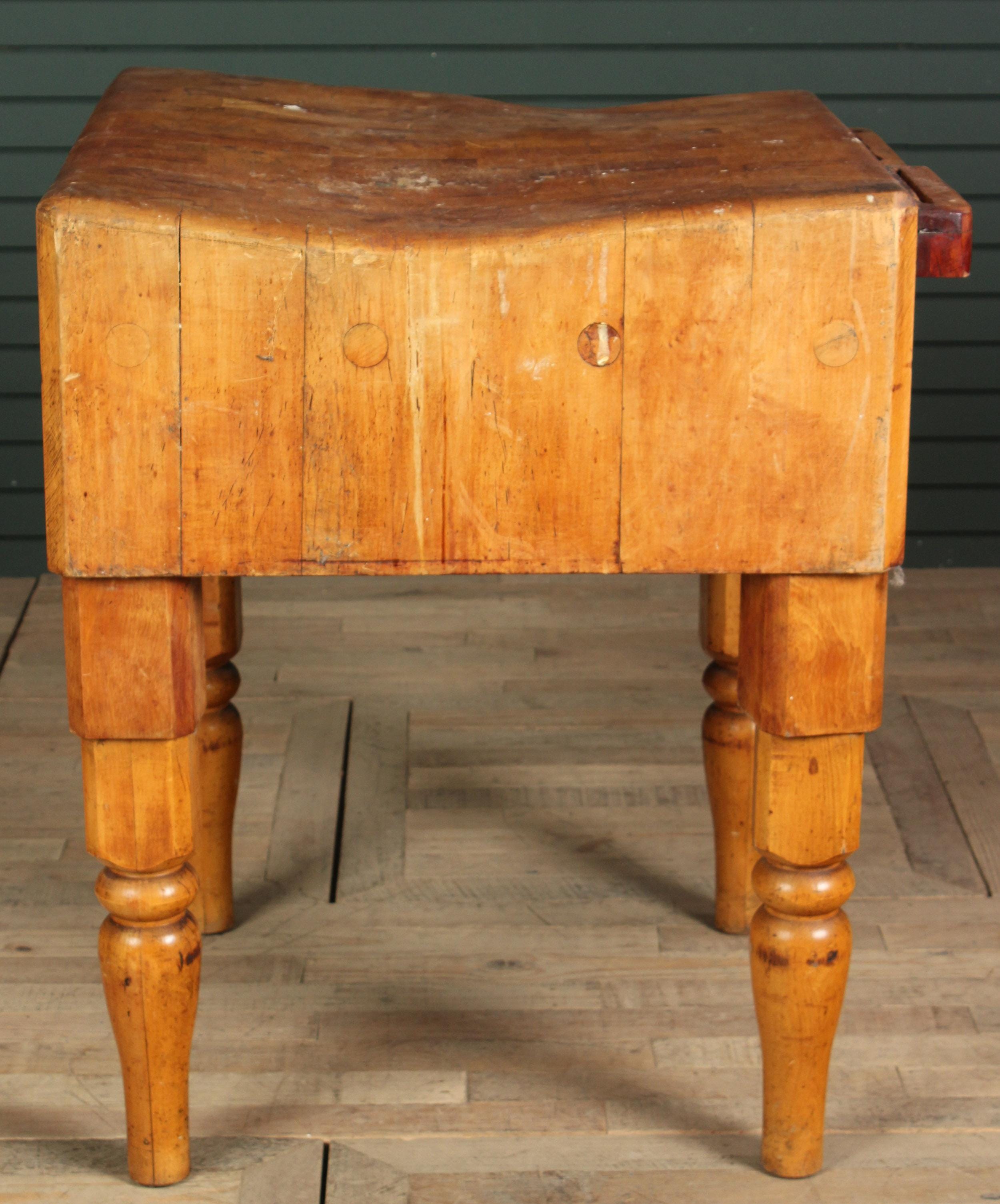
David, on the other hand, cooked. He was the first white person I ever knew who owned a wok. When he and my mother got together we moved into his house, a sizeable pile of bricks erected sometime in the 1890s. He’d acquired a hulking old gas range with six gas burners and a huge cast aluminum kettle that sank down into the white enameled range top like a missile silo, heated by the same burners as the two yawning ovens. The first time I ate what I’ve come to think of as pit beef it came out of that built-in cauldron, one of the seemingly limitless batches of slow-cooked food that fed the weekend wild things. I can still remember the salty tang of it lingering on my tongue even after I’d finished my plate. He also had an enormous old butchers' block, bought from a local butcher who retired and closed up shop. It took up the entire middle of the kitchen and had been used so long and so well by its original owner that it had a pronounced valley worn into the wood on the side where the butcher had plied his trade, a gentle, smooth, velvety curve I let my palms drift over every chance I got. I covet that butcher's block to this day.
When my mother made our meals, which was most of the time, she made broiled chicken breasts whose skin was crusted with Lawry’s seasoning salt, and square tiles of turbot, previously frozen, prepared the same way. She made special low-calorie pancakes made with non-fat cottage cheese and two tablespoons of white powder from the Sweet ‘n’ Low box. She served three-bean salad whose dressing was mostly celery seeds and juice from the jar of bread-and-butter pickles, and especially for me, her fat daughter, a “diet” egg salad that used only hard-cooked egg whites mashed with a salad dressing she made with a powder from a foil packet plus some water and vinegar.
When David cooked he made egg rolls, their flaps sealed shut with peanut butter, which seems weird but wasn’t bad. A decade or so later, the first time I ate satay, I flashed back to it instantly. He used peanut butter in something he called “African peanut soup” too, turning a whole jar of gritty tan paste from the food co-op into a murky bowl that was savory, a little spicy, full of soft gentle vegetables, and so tasty I never questioned any of it. Sometimes, late at night, mysterious curry smells would drift up to my bedroom in the attic and wake me up with their deliciousness, then linger faintly under the eaves for days.
David was the kind of cook for whom a big old cool dry basement was a useful accessory. Ours was dug into the side of a hill, and the temperature never changed no matter what. On one side there was a coal cellar that still had a delivery chute that opened at either end and still smelt excitingly of mineral dust even though it had long since been converted into the canned-goods pantry where he and my mother stored everything from toilet paper to wine. Along one wall, someone had built a set of large cupboards that we used for storing empty jars, Passover pots and pans and china, and the canned goods my mother laid in like we were expecting nuclear winter, then forced me to alphabetize. (Soup went under C for Campbell’s, not S for soup, with all the different flavors alphabetized within the category.)
That basement also held big plastic garbage barrels full of green tomatoes bobbing in brine and crocks of cabbage funkifying its way toward sauerkraut. A handful of times David filled a wallful of cinderblock-and-board shelves with bottles of homebrew beer, a few of which would inevitably burst with a sound I imagined, at least until I heard the genuine article, sounded like gunfire.
Once, and only once, the basement sheltered a hundred snails. How else to cook escargots? If the eater could not travel to France, then France would clearly have to find its way to Ohio, and so David had found someone to sell him several buckets of what he was assured were the correct type of snails. He had taken pains to find out exactly how one was to feed and fatten them to purge them of any off-odors or suspicious tastes. Once home, he and put them in the bottom of one of his big dark-green plastic garbage barrels with a little water and some lettuce leaves. I looked on with curiosity. On the one hand, they were snails, which I found disgusting. On the other hand, they were kind of like a weird pet. For the sin of taking an interest I was rewarded with the duty of going down once a day to scatter a little cornmeal and a leaf or two of romaine into the impromptu snailarium. The snails were to eat cornmeal and lettuce until they were ready, though I had and still have no clue how one determines when that is. I was commended to my task and informed that I would probably learn a few things about snails.
